How the WNBA’s New Popularity is Transforming High School and NCAA Women’s Basketball
Women’s basketball is having a moment — and it’s more than just a spike in TV ratings. The WNBA’s surging popularity is creating ripple effects that stretch from high school gyms to NCAA Division I arenas, reshaping the women’s game at every level.
In 2024, the WNBA delivered its most-watched season in 24 years, drawing more than 54 million viewers across ABC, ESPN, CBS, and other networks. Games on ESPN averaged 1.19 million viewers, up a staggering 170% from 2023. In arenas, the buzz was just as real — the league recorded its highest attendance in 22 years, with several games selling out 20,000-seat venues and breaking single-game attendance records.
So what’s behind this explosion of interest? And more importantly, how is it shaping the next generation of players in high school and college?
Impact on High School Basketball
Participation Is Rising
Research from the SSRN eLibrary shows that the presence of a WNBA team in a state boosts participation in girls’ high school basketball by 1.2 to 2.1 players per high school. More role models on TV means more girls seeing a future in the sport — and picking up a basketball themselves.
Role Models with Real Reach
Today’s WNBA stars — from A’ja Wilson and Breanna Stewart to Sabrina Ionescu — aren’t just athletes. They’re public figures with global fanbases, delivering highlight reels, championship celebrations, and personal stories directly to millions through Instagram, TikTok, and YouTube. For young players, these women show that basketball isn’t just a hobby — it’s a viable, exciting career path.
Grassroots Growth
Local youth leagues and travel programs are seeing enrollment climb. As more young girls watch WNBA games — often alongside their parents — they’re inspired to join organized basketball earlier, developing skills at a younger age and raising the competitive bar before they ever step into a varsity gym.
Impact on NCAA Division I Women’s Basketball
A Higher-Caliber Recruiting Pool
As participation rises and competition intensifies at the high school level, NCAA coaches are scouting a deeper and more skilled pool of athletes. This influx of talent has directly led to higher-quality play across Division I, making women’s college basketball faster, stronger, and more entertaining than ever.
Bigger Crowds, Bigger Buzz
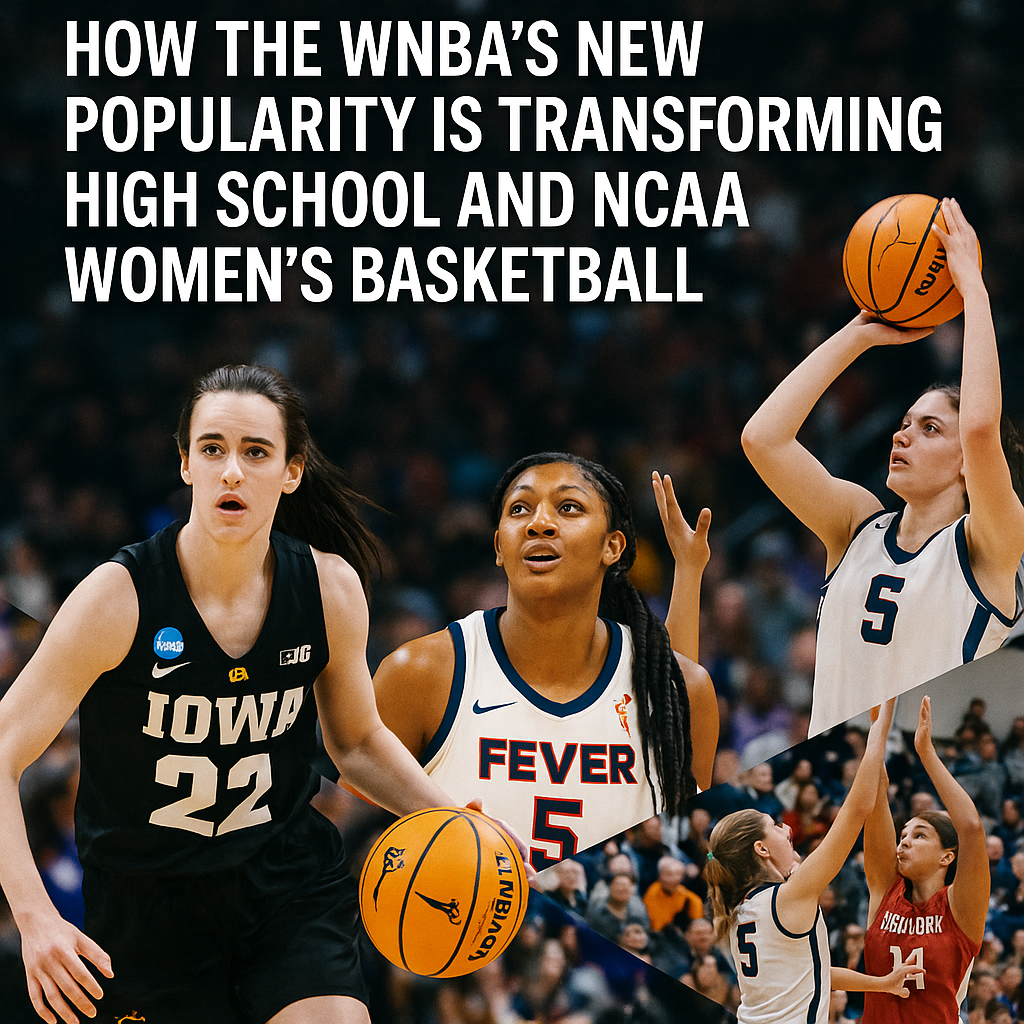
The WNBA’s momentum is carrying into the NCAA season. College arenas are filling up for regular-season games that once drew only modest crowds, and March Madness viewership is surging. In 2024, the women’s NCAA tournament saw record-breaking audiences — much of it fueled by the star power of players like Caitlin Clark and Angel Reese, who captivated fans before making the leap to the pros.
Star Power Pipeline
The college-to-WNBA pipeline has never been hotter. Caitlin Clark’s #1 overall selection by the Indiana Fever in 2024 sparked immediate fan migration from NCAA to WNBA — her replica jersey sold out in 24 hours. Angel Reese brought a massive following from her collegiate championship run to her pro debut, where she continued to shine. These transitions create a feedback loop: NCAA stars raise interest in the WNBA, and WNBA success inspires the next wave of high school talent.
Social Media & Branding
Today’s female athletes understand the power of personal branding. From highlight reels to behind-the-scenes content, players are building loyal fanbases long before they graduate. This online engagement not only boosts their own marketability but also drives more fans to NCAA and WNBA games alike.
The Perfect Storm for Women’s Basketball
The WNBA’s current boom didn’t happen by accident.
- Better TV access has put games on major networks instead of obscure streaming channels.
- Stronger marketing has spotlighted marquee matchups and star personalities.
- Social media dominance (nearly 2 billion video views in 2024) has connected players directly to fans worldwide.
The results speak for themselves: WNBA apparel sales rose 601% in 2024, and the league’s All-Star Game on ABC drew 3.4 million viewers — a 305% increase over the previous year.
Looking Ahead
If this trajectory holds, the current generation of young players could be the most talented and marketable in women’s basketball history. More young girls will join the sport, more elite talent will emerge at the NCAA level, and the WNBA will continue to feed off that energy — creating a cycle of growth that could redefine women’s sports in the United States.
For anyone still doubting the WNBA’s influence on the game’s future, the evidence is clear: what’s happening in the pros today is shaping the stars of tomorrow. And the pipeline from high school → NCAA → WNBA has never been stronger.