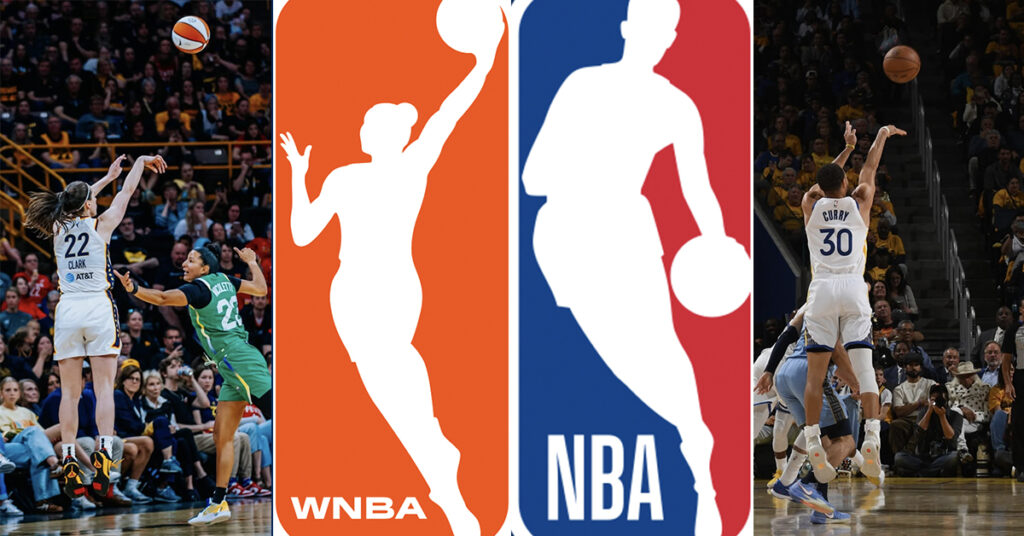
In 2025, we live in a world where young girls can dream of becoming professional basketball players, thanks in part to the incredible athletes who make up the Women’s National Basketball Association (WNBA). These women are skilled, passionate, and powerful role models for millions. But when it comes to pay, they still live in a drastically different world than their male counterparts in the NBA.
Let’s be clear: the WNBA is not a startup league. Founded in 1996, backed fully by the NBA, and now expanding rapidly with new teams in cities like San Francisco, Portland, Toronto, and Philadelphia, the WNBA is a proven, growing brand. It showcases elite talent, produces Olympic champions, and draws millions of fans both live and online.
And yet, the pay gap between NBA and WNBA players remains staggering.
The Numbers Speak Loudly
- NBA Average Salary (2025): ~$10.5 million
- WNBA Average Salary (2025): ~$120,000
- Top NBA Salaries: $50+ million/year
- Top WNBA Salaries: ~$240,000/year
Let’s take the #1 draft picks for a real-world comparison:
- Victor Wembanyama (NBA, 2023 #1 pick): $12.16 million rookie salary
- Caitlin Clark (WNBA, 2024 #1 pick): $76,535 rookie salary
That’s not a typo. The most anticipated women’s basketball player in a generation makes in a season what some NBA players make in half a quarter.
Follow the Money: Revenue Share Disparity
Much of this gap is rooted in how each league shares revenue with its players:
- NBA players: Receive approximately 50% of Basketball Related Income (BRI)
- WNBA players: Receive just 9.3% of league revenue
This unequal revenue-sharing structure means WNBA players are not only being paid less — they are being paid from a significantly smaller slice of the overall financial pie.
The NBA, which has been around since 1946, is the second-highest grossing professional sports league in the world. It brings in over $10 billion annually and has built global empires with players like LeBron James and Steph Curry. The WNBA may not yet rival those numbers, but it has the backing, talent, and fan base to warrant much more equitable treatment.
The Growth of the Women’s Game
The WNBA isn’t shrinking — it’s expanding:
- New teams in San Francisco (Valkyries), Portland, and Toronto are already on the way.
- Additional teams in Detroit, Cleveland, and Philadelphia are planned for 2028–2030.
- The WNBA All-Star game is drawing national headlines.
- College and high school girls’ basketball has never been more popular.
There is real momentum. So why hasn’t pay caught up?
The Message It Sends
What message are we sending to the next generation of female athletes?
That you can train just as hard, dream just as big, and still be paid 1/100th of your male counterparts?
That even with full NBA backing, media attention, and growing attendance, your worth will be capped — not by your talent, but by outdated financial structures?
The young women we highlight here at Full Court Dream deserve more than that. They deserve to believe their full court dream includes not just fame, but fair pay.
The Historical Echo
Let’s not forget that in 1920, women in the U.S. gained the right to vote after decades of struggle. Now, more than a century later, women are still fighting — this time for economic equality in professional spaces.
Yes, women’s participation in the workforce has grown significantly since 1950. But the pay gap remains:
- In 2022, women earned just 84 cents for every dollar earned by men in full-time roles.
- Women are underrepresented in executive and leadership positions.
- Gender bias and the burden of unpaid household labor continue to limit upward mobility.
This isn’t just about basketball — it’s about a systemic pattern that needs to be broken.
The Solution Starts at the Top
Why not establish a revenue-sharing bridge fund — with contributions from each of the 30 NBA teams — to create more equitable pay for WNBA players?
Why can’t NBA Commissioner Adam Silver and WNBA Commissioner Cathy Engelbert sit down and revise the revenue-sharing structure that continues to undervalue women?
This is no longer a matter of awareness. It’s a matter of action.
What We Believe at Full Court Dream
At Full Court Dream, we cover the journey of basketball players from high school to college to the pros — men and women alike. We believe in highlighting their stories, their passion, and their sacrifices.
But we also believe that dreams should pay — fairly.
The next Caitlin Clark, the next Sabrina Ionescu, the next A’ja Wilson shouldn’t have to play year-round overseas to survive. They shouldn’t have to juggle second jobs or brand deals just to match a fraction of their male peers’ income.
We believe in equality. On the court. Off the court. And especially at the bank.
Let’s raise the bar. Let’s close the gap. Let’s make sure every Full Court Dream includes a full paycheck.