By Full Court Dream Staff
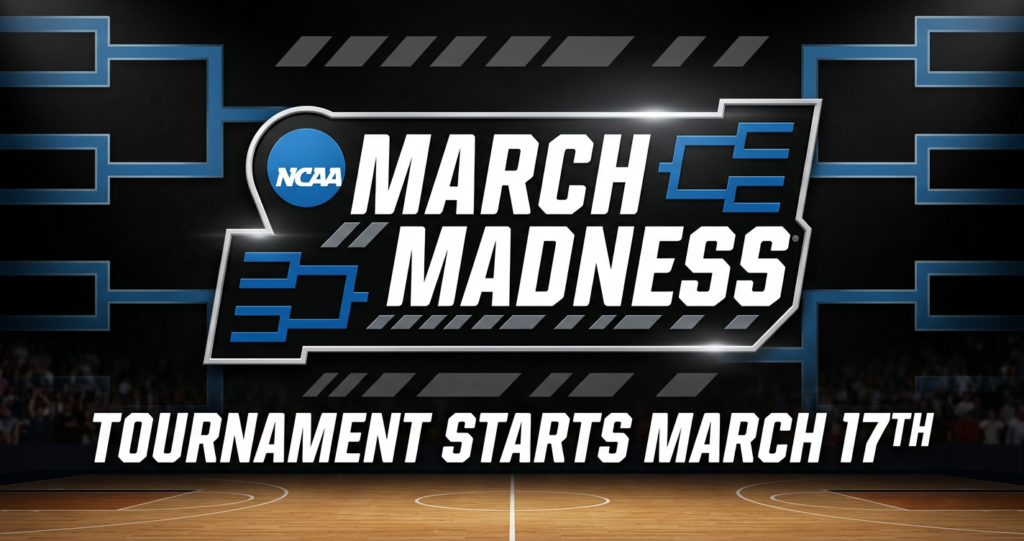
Every March, college basketball takes over the American sports calendar, and in 2026 the road begins with Selection Sunday on March 15, when the NCAA reveals the full 68-team field and the bracket that will shape the sport’s biggest event. Two days later, on March 17, the tournament tips off with the First Four play-in games in Dayton, Ohio, trimming the field to the traditional 64-team bracket before the first round begins.
That is the beauty of March Madness. Every season builds toward this moment, where résumés, rankings and reputations suddenly matter less than what a team can do in one game, in one half, in one possession. It is the most unforgiving and most thrilling championship format in American sports. One loss and a season is over. One great weekend and a team can become part of college basketball history forever.
The NCAA men’s basketball tournament first began in 1939, and it looked nothing like the giant event fans know today. The original field had only eight teams. The bracket expanded over time, reaching 16 teams in 1951, then 32 teams in 1975, before growing into the modern 64-team bracket in 1985. The event later expanded again, eventually reaching the current 68-team format, with the First Four determining which teams move into the main 64-team field.
The phrase “March Madness” was not originally created for the NCAA tournament. It first gained traction in Illinois high school basketball, but it became attached to the NCAA tournament in the early 1980s and helped give the championship its now iconic identity. Once the term entered the national college basketball spotlight, it stuck, because no other phrase better captured the chaos, heartbreak, drama and joy of the tournament.
And no program in the history of the men’s event has owned that stage more than UCLA, which still holds the record for the most NCAA men’s basketball national championships with 11. Kentucky is next, and blue-blood programs like North Carolina, Duke, Kansas and UConn have all helped shape the history of the tournament as well. But every year, even with the power programs in the spotlight, March seems to create room for a new story.
This year, one of the biggest stories is the incredible freshman class expected to headline the tournament. The star power begins with AJ Dybantsa at BYU, continues with Darryn Peterson at Kansas, and includes Cameron Boozer at Duke, one of the most talked-about young players in the country. These are not just promising freshmen. These are players already carrying NBA-level buzz, national attention and massive expectations as they head into the biggest month of the season.
Dybantsa gives BYU a dynamic star with size, skill and shot-making ability. Peterson has brought elite scoring punch and star guard energy to Kansas. Boozer has been a major force for Duke with his polished offensive game, presence in the paint and overall maturity. If all three teams make strong runs, this freshman class could become one of the defining storylines of the 2026 tournament.
But the event will not be built only around freshmen and future lottery picks. There is also unfinished business for teams that came painfully close last season, including Houston. The Cougars were right there last year and saw the national title slip away in the closing seconds. That kind of loss stays with a program. It can haunt a team, or it can sharpen it. With Milos Uzan back to lead Houston and Kelvin Sampson once again guiding one of the toughest teams in the country, the Cougars absolutely look like a team capable of making another deep March run. Houston has the toughness, experience and defensive identity needed to get back to the Final Four conversation.
At the top of the national picture, the race looks loaded. Florida remains firmly in the top-tier conversation and is trying to position itself to go back-to-back, a storyline that would instantly make the Gators one of the most watched teams in the bracket. Arizona and Michigan have also put together elite seasons, matching the level of consistency shown by current No. 1 Duke. That gives this tournament the feel of a year where several teams have a real case to believe they can cut down the nets.
Of course, every March needs its sleeper teams, and those are often the programs that make the bracket truly dangerous. One sleeper to watch is Saint Mary’s, a program that has built its identity on discipline, toughness and confidence. The Gaels could be fueled by standout guard Mikey Lewis, whose scoring ability and poise can make Saint Mary’s a very dangerous team once the tournament begins.
Another team that feels capable of making noise is Alabama. With Nate Oats on the bench, the Crimson Tide always have the ability to play fast, stretch the floor and put teams under real pressure offensively. And if players like Aden Holloway and Aden Sherrell hit their stride at the right time, Alabama becomes the kind of team nobody wants to see in its region.
That is what makes this year’s bracket feel so compelling even before the field is officially announced. There are the clear headliners like Duke, Houston, Florida, Arizona, Michigan, BYU and Kansas, but there are also teams just below that level that could explode once the games begin. In March, experience matters. Guard play matters. Momentum matters. Confidence matters. And sometimes the hottest team is more dangerous than the highest-seeded one.
There is also the sheer scale of the event itself. March Madness is no longer just a basketball tournament. It is a national ritual. It dominates sports television, office conversations, social media and bracket pools across the country. It also drives enormous betting activity every year, with billions of dollars wagered legally and unofficially on the men’s and women’s tournaments combined. That number continues to grow, showing just how massive the event has become in American sports culture.
And that is why the tournament continues to own this time of year. It has history. It has tradition. It has blue bloods. It has future NBA stars. It has sleepers nobody wants to face. It has heartbreak, redemption and chaos. From Selection Sunday to the First Four to the round of 64 and beyond, March Madness remains the ultimate test in college basketball.
This year’s event looks especially loaded. The freshman spotlight belongs to AJ Dybantsa, Darryn Peterson and Cameron Boozer. Houston has another shot to finish what it nearly completed a year ago. Florida is chasing another title. Duke, Arizona and Michigan have the look of true contenders. Saint Mary’s and Alabama could become dangerous bracket-busters. And somewhere inside that 68-team field, another unexpected story is waiting to happen.
That is March Madness. It started in 1939. It grew from eight teams to 32, then 64, and now 68. And every year, it still delivers the same promise: that for three weeks in March and early April, anything can happen.